

Let’s cut to the chase: if you’re training your chest and skipping the lower region of the pecs, you’re leaving gains on the table. Most people zero in on their upper chest or the “middle pec area” because it’s visible, it feels satisfying, the bench press hits it hard. But the lower chest exercises? They’re the unsung heroes that shape a full, sculpted chest. They’re what turn “good” into “great from every angle.”
In this blog post we’ll dive deep really deep into how to build lower pecs, what the best lower chest workout routine is, why it matters, and how you can train smart so you don’t just “work out the chest” but sculpt the lower chest.
Why You Should Target Your Lower Chest
When it comes to lower chest exercises, understanding why you’re training this area helps you build balance and strength. When you look at your chest in the mirror, there’s more going on than just “a chest.” The chest muscles specifically the major part called the Pectoralis major have distinct regions: the upper fibres, the mid-section, and the lower portion. Many pressing movements (flat bench, incline bench) hammer the upper and middle areas. The lower pecs? They often get ignored.
Focusing on the lower pecs brings several advantages:
- Symmetry & aesthetics: A well-developed lower chest gives that “shelf” or “line” under the pecs which makes your chest look full and balanced from all angles. Without it, you might look like you’ve done all upper and middle but the chest stops short.
- Functional strength: That lower region supports pushing motions from pushing yourself up off a couch, to pressing something overhead then down, and even in sports movements. When you build lower pec strength you improve your pushing-base.
- Muscle activation variety: Training only the standard bench press is fine, but the lower chest fibres may not be getting max activation. Including targeted lower chest exercises ensures you’re hitting those fibres intentionally.
- Better overall chest development: Because soon your upper chest might be strong but you’ll be frustrated that it doesn’t “pop” like you want. The lower chest helps complete the picture.
So if your goal is to build a chest that’s full, defined, with that “lower pec line” that gets noticed, you need a lower chest exercises routine that places emphasis on this area.
Understanding the Anatomy & Activation of the Lower Chest
Before we jump into the lower chest exercises, let’s get a little anatomical insight because when you understand how something works, you can train smarter (and feel way more connected to the muscle you’re targeting).
The muscle layout
The pectoralis major (the big chest muscle) attaches from your sternum and clavicle and inserts at the humerus (upper arm bone). It has different fibre directions:
- The upper / clavicular fibres (near the collarbone)
- The mid fibres
- The sternocostal fibres that run downward toward the lower chest.
When you perform movements that bring your arms downwards and inwards (especially from a higher start point) you engage those lower chest fibres more strongly. Movements on a decline (bench set in decline) or from low pulleys help bias the lower region.
Why the lower chest doesn’t always get activated
- Standard flat bench or incline bench emphasise the mid/upper regions more.
- Many routines focus on “chest day” with bench + fly + push-ups, but lack movements that angle specifically to hit the lower fibres.
- Without mind-muscle connection, you might perform an exercise but still not feel the lower pec working much.
- At the end of a workout you might be tired and skip the harder, more focused stuff.
How to activate the lower chest
- Use a decline angle (so your torso is lower than your hips), which changes the vector of force.
- Use cable crossovers from a low pulley or low start point so the cables travel upward and inward that upward-inward path engages the lower portion.
- Use bodyweight movements like dips with a forward lean so the lower chest takes more load.
- Focus on squeezing the pecs at the bottom of the movement and increasing the range of motion (especially eccentric/lowering phase) so you get stretch in the lower fibres.
The Best Lower Chest Exercises to Build Definition
Alright, let’s put it all into action. Below are the top moves I recommend in your lower chest workout routine you can mix and match depending on access to equipment, your experience level, and your goals. Each one is chosen because it targets the lower pec region when performed with correct form and intention.
1. Decline Bench Press
If you’re serious about strengthening your lower chest, this is a staple. The decline bench press is one of the most effective lower chest exercises to bring out and define the lower part of your chest. Set your bench at about a 15–30° decline, lie back so your head’s slightly lower than your feet, and grab a barbell or dumbbells. Lower the weight slowly, feel that stretch across your lower pecs, then press up and slightly inward as you squeeze your chest at the top. Go for 3–4 sets of 8–12 solid reps controlled, not rushed.
Why it works: The decline angle shifts the focus from your upper and mid chest down to those stubborn lower pecs, making it one of the best ways to build real lower-chest thickness.
2. Low Cable Crossovers
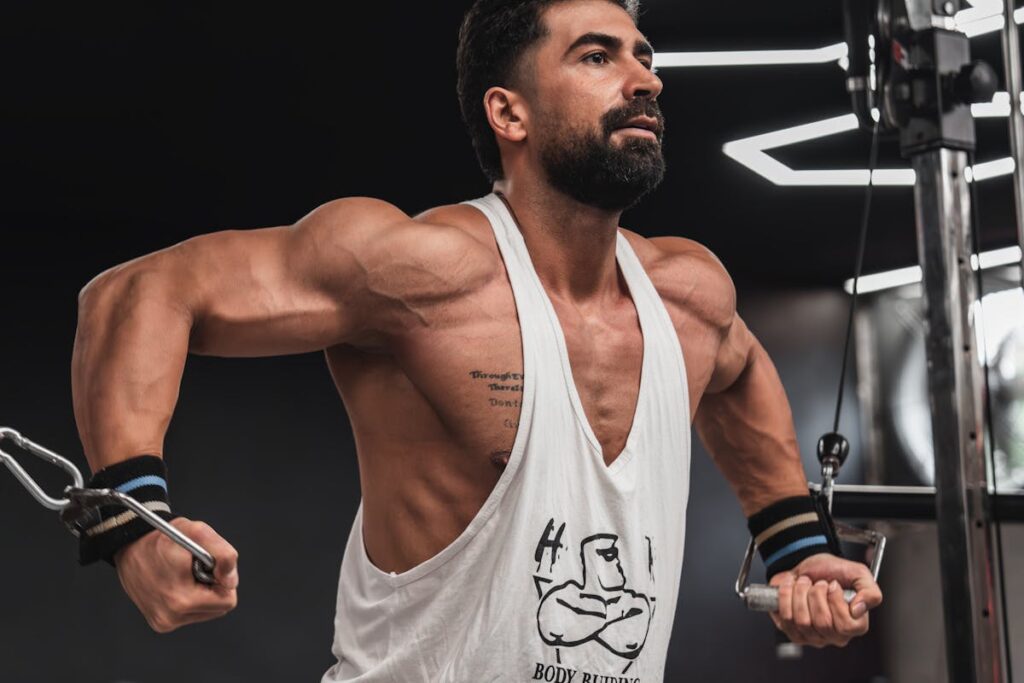
Low cable crossovers are essential if you want to isolate the lower pecs. Place the pulleys close to the ground, take a small step forward, and make a smooth arc with your hands up and together.. Hold that squeeze for a second that’s where the lower chest really lights up. Among all lower chest exercises, this one gives an incredible pump and isolation feel when performed with control.
How to do it:
- Set cable machines with pulleys at or just slightly above floor level (or use a crossover machine with adjustable pulleys low).
- Stand in the centre, grab the handles. Step forward so you have tension on the cables.
- With a slight forward lean, start with arms out wide and low. Then bring your hands upward and inwards (imagine drawing an arc up toward your mid-chest/upper-abs area).
- At the top of the movement “squeeze” your lower pecs (think about bringing your arms together and down into the chest).
- Emphasise control: a long lowering/return phase helps.
- Do 3-4 sets of 10-15 reps.
Why it works: The cable path from low to up-inwards stimulates the lower fibre direction. It’s more of an isolation move, giving you a chance to feel that lower chest working, rather than relying purely on compound pressing.
3. Chest Dips
“Bodyweight (or weighted) dips are one of the best lower chest exercises you can do when performed with the right lean and form. This is one of those classic lower chest exercises that never goes out of style simple, tough, and effective
How to do it:
- Use parallel dip bars. Grip the bars, lift your body.
- Lean your torso forward slightly (this shifts more load to the pecs versus a strictly vertical dip which targets triceps more).
- As you dip, keep elbows wide-ish (not tucked in tight) to allow full chest engagement. Descend until you feel a good stretch across your lower chest area.
- Push back up, again thinking about the lower pecs.
- Use a weighted vest or a dip belt to continue pushing yourself when standard bodyweight dips become too simple. Limit your workouts to about three sets of eight to twelve repetitions, but if you’re strong enough to do it with just your bodyweight, up the ante.
Why it works: This movement uses your body weight and your chest’s lower region has to stabilise and push you up. With the forward lean you emphasise the pecs (especially lower fibres) more than just triceps.
4. Decline Dumbbell Flyes
Flyes are excellent for stretching and activating muscles in a slightly different way than presses. Doing them on a decline bench biases the lower chest.
How to do it:
- A little incline of 15 to 30 degrees is ideal for your bench. With your hands facing each other and a dumbbell in each hand, lie back comfortably and prepare to move all at the same moment.
- With a slight bend in the elbows, open your arms wide, allowing a deep stretch in your chest, particularly lower fibres.
- Squeeze your lower chest at the top of the dumbbells as you bring them up and together without hitting them.
- Focus on feeling the lower pecs working rather than merely lifting weights.
- Do ten to fifteen repetitions in three sets.
Why it functions: Instead of using pushing, the fly motion on a decline isolates the chest muscle and provides additional stretch. This contributes to the development of the lower chest’s definition.
5. Decline Push-Ups
You don’t always need fancy equipment. A great “at home or gym” finisher move: decline push-ups, which emphasise the lower chest when your feet are elevated.
How to do it:
- Place your feet on a bench and assume a firm push-up position. Feel that lower chest work as you carefully lower your chest and then raise it again. Do you want it to be harder? Put on a backpack or slow things down. Aim for three sets of the number of repetitions that nearly bring you to failure.
Why it works: When you’re declined (feet up, hands down) you are pressing more from that lower chest angle. It’s also great for layering in additional volume without needing a bench.
Putting It All Together – A Sample Lower Chest Workout Routine
You’ve got the moves down, now let’s turn them into a real workout you can run with. This lower chest session fits perfectly into your regular chest day especially if you hit chest twice a week and want one day to really focus on the lower half.
Start off easy: do five to ten minutes of light cardio, then loosen up your shoulders and chest a bit. Once you’re warm, jump into it:
- Decline Bench Press – 4 sets of 8–12
- Chest Dips – lean slightly forward, 3 sets of 8–12
- Low Cable Crossovers – 3 sets of 10–15
- Decline Dumbbell Flyes – 3 sets of 10–15
- Decline Push-Ups: 2 sets to failure aim for around 12–20 reps if you can
It’s a short, direct routine that hits the lower pecs from every angle without overcomplicating things.
Training Tips:
- Prioritize heavier compound moves (decline bench, dips) early when you’re fresh.
- Use isolation moves (cables, flies) afterward to really burn out the lower pecs.
- Focus on mind-muscle connection especially on the isolation parts. Feel the lower pec fibres stretching and contracting.
- Take it slow with every rep. Let the weight come down gradually so you really feel your chest stretching, pause a beat at the bottom, and then push or fly it back up without rushing. Going through the full movement is key don’t short yourself on the lowering phase.
- Catch your breath between sets about a minute or a bit more for muscle growth, and a little longer if you’re going heavy. When it comes to training frequency, hitting your chest two or three times a week works well, just make sure you leave a couple of days in between so your muscles have time to recover and actually grow.
Smart Tips for Better Results from Lower Chest Exercises
It’s not just about “doing the exercises”, how you do them and what you pair them with matters a lot. Even the best lower chest exercises won’t deliver results if your form, recovery, or nutrition aren’t on point. Here are smart tips to amplify your results.
1. Prioritize form over weight
Going heavy is tempting. But if you load too much and your form breaks down, your lower chest might not be doing the work other muscles will compensate (shoulders, triceps). Make sure you feel the lower pec working. The mind-muscle connection beats brute weight every time when you’re isolating.
2. Mix up your routine
Variety helps avoid plateaus. You might do decline bench one week with barbell, next time with dumbbells (which adds stabilizer challenge). You might vary dips by using a dip machine or adding resistance. The low cable crossover could be done at a steeper angle or using a single-arm variation. Variety = stimulus = growth.
3. Pay attention to volume and recovery
If your chest day is too aggressive, you might hamper recovery. Lower chest fibres still need rest. Keep volume manageable. Also, don’t target the same angle every time. If you always do decline bench + dips, your body might adapt. Mixing angles (slight decline change) still hits the lower fibres but with fresh stimulus.
4. Nutrition and overall bodybuilding support
If you don’t eat enough or get enough sleep, no matter how hard you train or how many lower chest exercises you do, you won’t see any real improvement. Make sure you get enough protein, stay hydrated, consume enough food to fuel your workouts, and allow your body some relaxation. An approximate target of 1.5–2 grams of protein per kilogram and a restful night’s sleep can make a big difference.
5. Use progressive overload
Do you want to grow? You must gradually push those muscles beyond what they are accustomed to. This could involve increasing the number of repetitions per set, adding a set, gradually raising the weight, cutting down on rest time, or lengthening the time under strain (slowing the movement). Just make sure you’re keeping track of things.
6. Don’t neglect overall chest and supporting muscles
While you’re focusing on lower chest, remember: your upper and mid chest still matter. A balanced chest looks better and is stronger. Also, your shoulders, back, and triceps support chest movements if they’re weak or tight, your chest training may suffer. Use warm-ups, mobility drills, and supporting muscle work (like rear delts, lats) to keep everything balanced.
7. Monitor your progress and adjust
Take pictures, measure your chest circumference (or lower chest region), note your strength progress. If after 4-8 weeks you’re not seeing much change, maybe change your routine: angle, rep range, volume. Tracking helps avoid “I trained hard but nothing changed” frustration.
Common Mistakes to Avoid When Focusing on Lower Chest
- Another mistake? Treating lower chest exercises like an afterthought instead of giving them the same energy as your flat bench sets.
- Poor form on dips: Very upright dips hit triceps more. If you want lower chest, you must lean forward and keep the chest doing the work.
- Skipping the eccentric/negatives: Lowering phase is where the stretch happens, and for lower chest fibres that stretch is important. If you bounce up and down you miss out.
- Using too much weight for isolation exercises: On flyes or cables, if you’re using so heavy that you lose form, you’re likely using momentum rather than chest engagement.
- Overtraining without recovery: Hitting chest hard every day or neglecting rest means you’ll hamper growth. Muscle grows outside the gym.
- Ignoring full body posture and mobility: For chest work to be effective, your shoulders and upper back must be stable and healthy. If you’re tight across the chest, your form will suffer and you may not activate the lower chest properly.
How to Make It Work for Your Level
Beginners
- Focus on bodyweight or light dumbbells.
- Try dips (or assisted dips), decline push-ups, low cable crossovers with light weight.
- 2-3 sets per exercise, 10-15 reps.
- Do 1-2 lower chest exercises per week on chest day.
Intermediate
- Use the full routine above.
- Mix barbell and dumbbell for decline bench press.
- Cable crossovers with moderate resistance.
- Add weighted dips.
- Volume: ~15-20 total sets per session for chest (including upper/mid).
- Lower chest-specific: ~10-12 sets.
Advanced
- Use heavy loads safely, track volume, use advanced techniques (drop sets, supersets, partials).
- Example: Decline bench heavy for strength (5-8 reps), then dips weighted 8-10 reps, then isolation cables to failure (10-15 reps).
- Do 2 major chest sessions per week with at least one a lower-chest emphasis session.
- Periodise: have phases focusing on strength, hypertrophy, then definition.
From the Gym to Real Life: Why Have Defined Lower Pecs
Functional strength advantages
- Improved pushing power: When you press something from chest height downwards, your lower chest fibres are active.
- Better posture: A full chest development (including lower) helps maintain better chest shape and may support better posture (when combined with back work).
- Stability: The chest acts as part of the pushing chain strong lower pecs fill in gaps and reduce reliance on other muscles (shoulders, triceps) taking too much load.
Confidence and aesthetics
- A chest that reads “complete” upper, mid, lower looks more impressive.
- When you’re shirtless or in fitness photos, that lower chest “shelf” line adds to the visual effect.
- It gives you a distinction many do bench press, but fewer train with intention the lower chest. So it can give you an edge.
FAQs About Lower Chest Training
- Q: How often should I train the lower chest?
A: You can train chest 2-3 times per week depending on your overall schedule. For lower chest-specific work, 1-2 sessions per week is sufficient if you’re hitting volume and intensity. Always allow at least 48 hours recovery before hitting the same muscles again hard. - Q: Can I train lower chest at home without a bench?
A: Absolutely. Decline push-ups (feet on chair/bench) and body-weight dips (or chair dips) are great for home. If you have resistance bands, you can simulate low-pulley cable crossovers by wrapping the band low and performing upward-inward arcs. - Q: Will decline bench hurt my shoulders/back?
A: If done properly with correct form, decline bench is safe. But you must ensure your spine is supported, your shoulder blades are retracted (pulled back) into the bench, and you avoid excessive arching. Warm up properly, start with moderate weights, and ensure your bench setup is secure. - Q: How long until I see lower pec definition improvements?
A: That depends on your diet, training, recovery, and genetics. With consistent targeted lower chest exercises, proper nutrition and enough volume, you might see aesthetic changes in 6-12 weeks. Strength improvements may be seen sooner. - Q: What about hypertrophy vs strength rep ranges?
A: For hypertrophy (muscle size) you’ll typically use 8-15 rep range, moderate weight, controlled tempo. For strength you might use 4-6 reps, heavier weight, but you still must control the movement and emphasise the muscle. In lower chest exercises you can mix both: heavy presses + moderate rep isolations.
Conclusion: Time to Elevate Your Chest Game
If you’ve been doing chest day and thinking “I’ve benched, I’ve flyed, but something still feels missing,” it’s probably because your lower chest is underserved. You’ve been focusing on the visible top and the middle brilliant but the lower pec region is what completes the story.
Remember to target the bottom portion of your chest as well if you want it to appear fuller and more balanced. The majority of people neglect the work that truly shapes the bottom of the pecs in favor of flat or inclined exercises. You may significantly alter the appearance of your chest by adding a few good exercises like decline bench, low cable crossovers, dips, decline flyes, and even decline push-ups. They only need to concentrate on proper form and control; they don’t have to be elaborate.
The secret is to train wisely and consistently. Continue challenging yourself a little every week, switch up your routine when it becomes monotonous, eat enough to heal, and take breaks when necessary. Over time, you’ll start to see your lower chest fill out and tie everything together.
In actuality, consistency always prevails. It’s about showing up, feeling the muscles work, performing your repetitions with concentration, and providing your body with what it needs to thrive, not about one insane session.
Don’t overthink things, then. Start now. Develop your lower chest, add some definition, and advance one workout at a time. Your next chest-day session? Make the lower chest the star.
Get after it – your chest’s future self will thank you
Pingback: Incredible Benefits of Strength Training for All Ages
Pingback: The Truth About Not Losing Weight It’s Not What You Think