You’re working out. You’re trying to eat more. You’re even forcing down extra meals some days. But your weight barely moves, your arms still look the same, and progress feels painfully slow. Actually, you’re not consistently eating enough calories. Not just food. Not just random snacks. You need structured, repeatable, high calorie foods that push your body into a growth phase every single day.
Muscle gain isn’t about motivation. It’s about math. Calories in vs Calories out. And if you’re naturally skinny, busy, or just not a big eater, hitting those calories feels like a full-time job. That’s exactly what this guide solves. If you’re unsure where to start, understanding how many calories you need for muscle gain is the first step to making this work consistently
You’ll learn:
- The best high calorie foods (not junk, but effective)
- How to combine them into real meals
- How to eat more without feeling sick
- A simple system to stay consistent for months
If you apply this properly, your body will change. Not overnight but predictably.
Why High Calorie Foods Are Essential for Skinny Muscle Gain
Let’s break this down simply.
Your body has three modes:
- Deficit (eat less) = weight loss
- Maintenance (eat equal) = no change
- Surplus (eat more) = growth
If you’re stuck looking the same, you’re living in maintenance even if you feel like you’re eating a lot.
Here’s the problem with most skinny beginners:
- They underestimate how much they eat
- They overestimate how much they burn
- They rely on low-calorie foods
So even when they eat more, they still don’t hit a real surplus. This is where high calorie foods change everything. But food alone isn’t enough, pair it with Complete Guide to Muscle Building for Skinny Beginners training to actually turn those calories into size.
They allow you to:
- Increase calories without increasing food volume too much
- Stay consistent even on busy days
- Recover faster from workouts
- Build muscle instead of just spinning your wheels
But recovery is where real growth happens. This complete muscle recovery guide explains how to optimize rest, sleep, and nutrition for faster results.
What Actually Makes a Food High Calorie?
Before we list foods, understand this concept it will change how you eat forever.
Calorie Density = Calories per Bite
Two meals can look similar but one has double the calories.
Example:
| Food | Portion | Calories |
|---|---|---|
| Plain rice | 1 cup | ~200 |
| Rice + oil | 1 cup | ~350 |
| Rice + oil + chicken | 1 plate | ~700 |
Same base food. Completely different calorie impact.
Ideal Characteristics of High Calorie Foods
The best options for skinny muscle gain:
- High calories per serving
- Easy to prepare
- Affordable
- Not overly filling
- Can be eaten daily
The Ultimate List of High Calorie Foods (With Strategy)
Now we go deep.
1. Rice – Your Daily Calorie Foundation
Rice is the backbone of almost every successful bulking diet.
Why?
- Cheap
- Easy to cook in bulk
- Extremely versatile
- High in carbs (your main energy source)
How to use it effectively:
- Eat it twice daily
- Combine with fats (oil, butter)
- Pair with protein
Pro tip: Add just 1 tablespoon of oil = +120 calories instantly.
2. Peanut Butter – The Easiest Calorie Boost Ever
If you struggle to eat enough, this becomes your best friend.
- 2 tablespoons = ~200 calories
- Requires zero cooking
- Doesn’t fill you up too much
Ways to use it:
- Mix into oats
- Spread on bread
- Add to shakes
Even 4 tablespoons daily = +400 calories with almost no effort.
3. Whole Eggs – Cheap Muscle Fuel
Eggs are one of the most balanced foods you can eat.
- Protein + fats
- Easy to cook
- Extremely affordable
Best approach:
- 3–6 eggs per day
- Boil in bulk to save time
To maximize muscle growth, you also need to know how much protein you need per day alongside your calorie intake.
4. Whole Milk – The Skinny Guy Shortcut
This is one of the most powerful tools you’re probably underusing.
- Liquid calories = easier intake
- 1 liter = ~600 calories
Simple rule:
Drink milk daily.
Morning. Post-workout. Before bed.
5. Oats – The Perfect High-Calorie Breakfast Base
Oats alone aren’t super high calorie but they’re a perfect base.
Add:
- Peanut butter
- Banana
- Milk
Now you’ve turned it into a 700–900 calorie meal.
6. Chicken Thighs – Better Than You Think
Forget dry chicken breast.
Chicken thighs:
- More calories
- More flavor
- Easier to eat
7. Potatoes – Underrated but Effective
They’re:
- Filling but not overwhelming
- Easy to cook
- Great carb source
8. Bananas – Fast Calories Anytime
- Easy to carry
- No prep needed
- Quick energy
3 bananas daily = +300 calories.
9. Cooking Oils – Hidden Calorie Hack
Most people ignore this.
But:
- 1 tablespoon = 120 calories
- Add to any meal
This is how you increase calories without increasing portion size.
10. Nuts – Compact Energy
- High fat = high calories
- Easy snack
But don’t rely too heavily they can be filling.
How to Build High-Calorie Meals (Step-by-Step System)
Knowing foods isn’t enough. You need a repeatable system. If you want a done-for-you structure, following a cheap bulking meal plan for students makes hitting your daily calories much easier.
Step 1: Pick a Carb Base
- Rice
- Oats
- Potatoes
Since carbs are your main fuel source, understanding carbs for muscle growth helps you choose the right portions to support strength and recovery.
Step 2: Add Protein
- Eggs
- Chicken
- Lentils
Step 3: Add Fats (Critical Step)
- Oil
- Peanut butter
- Milk
Step 4: Add Extra Calories
- Banana
- Bread
- Extra portion
Real 3000+ Calorie Meal Plan Example
Let’s make it real.
Meal 1 – Breakfast (900 Calories)
- Oats
- Peanut butter
- Banana
- Milk
Meal 2 – Midday (700 Calories)
- 4 eggs
- Bread
- Fruit
Meal 3 – Lunch (900 Calories)
- Rice
- Chicken thighs
- Oil
Meal 4 – Snack (400 Calories)
- Peanut butter sandwich
- Milk
Meal 5 – Dinner (600 Calories)
- Potatoes
- Eggs or chicken
Before Bed (300 Calories)
- Milk + peanut butter
How to Eat More Without Feeling Full
This is where most people fail.
Strategy 1: Use Liquid Calories
Drink instead of chew.
Strategy 2: Eat Smaller Meals More Often
Instead of 2–3 meals go for 5 meals.
Strategy 3: Don’t Skip Breakfast
This sets your entire calorie intake.
Strategy 4: Train Your Appetite
Gradually increase calories weekly.
Strategy 5: Avoid Overeating Junk
It works short term but kills consistency.
Weekly Progress System (What Actually Works)
Follow this simple system:
- Weigh yourself daily
- Track weekly average
- Aim for 0.25–0.5 kg gain
If no change after 2 weeks:
Add 200–300 calories
Common Mistakes That Kill Muscle Gain
Let’s fix these.
- Eating randomly instead of following a plan
- Skipping meals
- Fear of gaining fat
- Not tracking progress
- Giving up too early
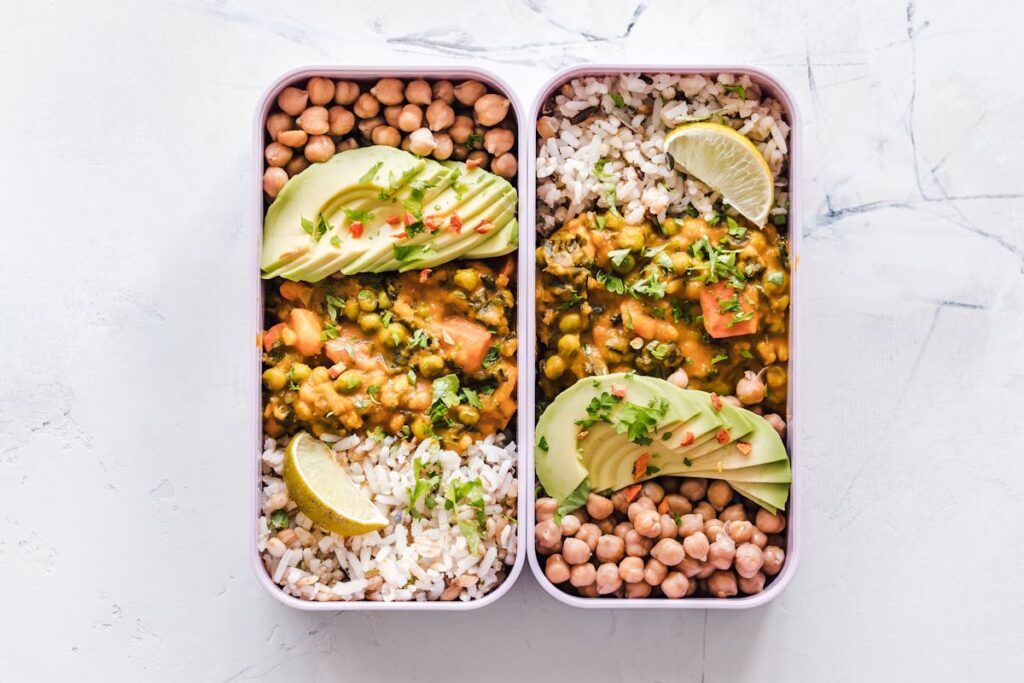
Vegetarian High Calorie Strategy
You don’t need meat.
Use:
- Lentils
- Chickpeas
- Milk
- Oats
- Peanut butter
Just increase portions.
Frequently Asked Questions About High Calorie Foods
What are the best high calorie foods for skinny muscle gain?
Rice, peanut butter, eggs, milk, oats, chicken thighs, bananas, and oils are the best high calorie foods for building muscle effectively.
How many calories should I eat daily?
Most skinny individuals need 2,500–3,200 calories depending on body weight and activity level.
Can I gain muscle without high calorie foods?
No. Without a calorie surplus, muscle growth cannot happen.
How fast should I gain weight?
0.25–0.5 kg per week is ideal.
Is milk good for bulking?
Yes. It’s one of the easiest ways to increase calorie intake.
Can I bulk without supplements?
Yes. Whole foods are enough.
What if I don’t feel hungry?
Use liquid calories and eat more frequently.
Are fats important for muscle gain?
Yes. They increase calories and support hormones.
Call to Action (CTA)
Now it’s your move.Don’t just read this and forget it.
Start today:
- Add one high-calorie meal
- Track your calories
- Stay consistent for 14 days
Then scale up. If you want a complete system, follow the cheap bulking meal plan on LetFitIt and commit to it.
Conclusion
At its core, muscle gain is simple. You need more calories than your body burns. And the easiest way to do that? High calorie foods. Not complicated diets. Not expensive supplements. Just consistent, structured eating.
Stick with it:
- 4 weeks = strength increases
- 8 weeks = visible change
- 12 weeks = real transformation
Pingback: Creatine for Skinny Beginners (Gain Muscle Fast)