

If you’re here, you’re probably frustrated because you’re not losing weight. And not the mild, “eh, I’ll try again next week” kind of frustrated. The deep kind. The kind that creeps in when you’re doing everything you’re supposed to do… and nothing is happening. You’re tracking your calories. You’re skipping dessert. Some days, you sip black coffee like it’s medicine you don’t want, and you haul yourself to the gym even though your body is screaming ‘stay in bed.
And still…
The scale doesn’t move. Your jeans fit the same. Your progress photos look identical. Naturally, you begin to ask yourself the issue that causes you the most mental distress:
I’m not losing weight; why?
The majority of individuals believe the solution is straightforward: Eat less. Train harder.
But what if that advice is exactly what’s keeping you stuck?
Perhaps it has nothing to do with your strictness, but rather with all the minor things that no one ever brings up.
Let’s break it down.
Why You’re Not Losing Weight: The Stress Problem Nobody Warned You About
You can be eating clean. You can be smashing workouts. You can be doing everything by the book. And still not lose a single pound. One word explains why: stress. Not just emotional stress, physical stress, mental stress, diet stress, training stress. Your body doesn’t separate them. It just feels pressure.
Are you familiar with the hormone cortisol? It acts as your body’s stress alert, sounding anytime it senses a problem. The problem is that your body becomes a little alarmed when that alarm never goes off. It begins to cling to fat and save energy as if it were preparing for a zombie apocalypse. Your muscles? They are disregarded. Your exercises? They feel like pushing a boulder uphill all of a sudden.
It’s not that you’re slacking or failing. Losing weight becomes far more difficult than it should be since your body is merely attempting to survive. Because of this, sometimes the scale doesn’t change even while you’re working hard every day.
What Raises Cortisol?
- Overtraining without enough recovery
- Undereating for long periods
- Poor sleep
- Constant caffeine
- Doom-scrolling before bed
- Comparing your body to influencers
- Training hard while mentally exhausted
Your body doesn’t care that your goal is fat loss. It just knows it’s overwhelmed. And overwhelmed bodies don’t let go of fat easily.
Training Hard Is Not the Same as Training Smart
Let’s talk about your workouts.
You might be proud of how hard you train. And you should be. Showing up matters. But here’s the part nobody likes to hear: pushing harder isn’t always the answer. More effort doesn’t automatically mean better results. If you’re sore all the time. Tired all the time. Chasing heavier weights while your body hasn’t caught up yet. You’re not progressing; you’re quietly running yourself into the ground.
Muscle doesn’t grow during workouts. Fat doesn’t burn during workouts. Those changes happen after, when your body recovers. If recovery never happens, adaptation never happens. You could be hammering chest day, leg day, and arm day, adding drop sets, supersets and still see no visible change.
Not because you’re weak. Not because you’re lazy. But because your body is exhausted.
Overtraining Can Stall Fat Loss
Signs you might be overdoing it:
- Poor sleep, even though you’re tired
- Low motivation
- Constant soreness
- Plateaued strength
- Increased cravings
- Stubborn fat that won’t budge
Ironically, backing off slightly often leads to better results. This is a massive blind spot in understanding why you’re not losing weight.
Why You’re Not Losing Weight Even Though the Scale Says You Should Be
Let’s talk about the scale.
Actually, let’s call it what it is. The scale is a terrible judge of progress.
It doesn’t measure fat loss.
It doesn’t measure muscle gain.
It doesn’t measure inflammation, water retention, or hormonal shifts.
It only measures total body weight. You can be burning fat, building muscle, and holding onto a bit of water all at the same time and the scale won’t budge. That happens a lot when you’re lifting seriously. Heavy compounds. Progressive overload. Even targeted work, like hitting the upper chest. Your body is changing, even if the number refuses to cooperate.
Muscle is dense. Fat is bulky.
You can get leaner while weighing the same.
Better Signs of Progress Than the Scale
- Clothes fitting differently
- Veins showing more
- Better muscle definition
- Improved posture
- Strength increases
- How your arms look after a pump
If you’re staring only at the scale, you might completely miss real progress and wrongly assume why you’re not losing weight is because nothing is working.
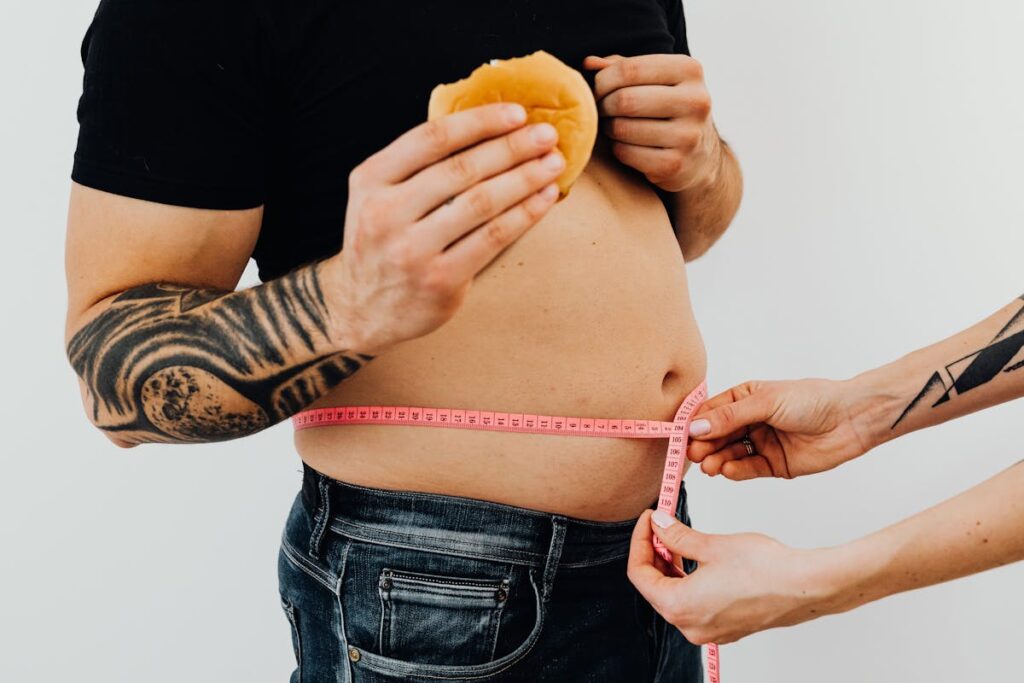
Why Not Eating Enough Can Be the Exact Reason You’re Not Losing Weight
This one makes people uncomfortable. But it matters. Eating too little for too long can absolutely stop fat loss. When calories stay too low, your body adapts. It becomes efficient. It lowers energy output. It downshifts metabolism. It starts protecting fat. This isn’t theory. It’s survival biology. You feel:
- Tired
- Cold
- Irritable
- Weak in workouts
- Obsessed with food
Eventually, muscle loss creeps in. Strength drops. And fat loss stalls completely.
You’re not bad at dieting. You’re under-fueling. Your body requires nourishment if you’re undertaking cardio, lifting big objects, and strengthening your lower back with lower back exercises that need control and stability. Food is not the enemy. It’s the raw material for change.
Cardio Isn’t the Answer to Why You’re Not Losing Weight
Cardio has a place. It’s good for heart health. It burns calories. But when cardio becomes the main strategy, problems start.
Excessive cardio:
- Increases hunger
- Interferes with recovery
- Can lead to muscle loss
- Raises stress hormones
More cardio doesn’t automatically mean more fat loss. In fact, many people finally start losing fat when they reduce cardio and focus on resistance training. Building muscle even with targeted work like long head bicep exercises increases your resting metabolism. That means you burn more calories even when doing nothing.
That’s long-term fat loss.
Your Body Adapts Faster Than You Think
Another overlooked reason why you’re not losing weight?
You’ve been doing the same routine for too long. Same exercises. Same weights. Same rep ranges. Your body adapts. It gets efficient. It stops changing. Progress requires stimulus. That doesn’t mean random workouts. It means smart variation.
- Increase load
- Add reps
- Change tempo
- Adjust rest periods
- Rotate exercises
If your chest day has been the same forever, switch things up. Swap flat presses for decline movements. Add unilateral work. Experiment with different lower chest exercises that place the muscle under tension through a deeper range. New stress = new adaptation.
Why Sleep Might Be the Missing Piece in Your Fat Loss Puzzle
Examine your sleep for a brutally honest explanation of why you’re not losing weight. Not your time in bed. Your quality of sleep. Sleep controls hunger hormones. Sleep regulates recovery. Bad sleep doesn’t just make you tired. It throws your blood sugar off, makes junk food harder to resist, and shrinks your willpower fast. It makes workouts feel harder and results slower.
You can eat perfectly and train intelligently, but if sleep is off, progress crawls. Seven to nine hours isn’t optional. It’s foundational. Sleep shapes hormones, recovery, and consistency.
You Can’t Spot Reduce Fat But You Can Shape Your Body
Let’s clear up a common myth. You can’t choose where fat comes off first. Genetics decide that.
But you can influence how your body looks as fat comes off. Building muscle changes your shape. That’s why focused work matters. Shoulder workouts won’t magically burn fat from your upper body, but they will build rounder, stronger delts that start to show once fat levels drop.
That visual feedback is powerful. It keeps you consistent. It sustains your motivation. And constancy always triumphs over perfection.
The Silent Reason You’re Not Losing Weight Is Your Mindset
This part gets ignored because it’s not measurable. But it matters more than most macros. Your body senses when you’re under a lot of stress, self-criticism, and frustration. Fat loss isn’t just physical. It’s psychological. Training from a place of punishment rarely works long-term. Training from self-respect does.
When you lift because you enjoy feeling strong.
When you eat because you want energy, not control.
Your body responds differently.
Concluding Remarks: The True Cause of Your Inability to Lose Weight
Most of the time, it’s not a lack of effort. It’s that things aren’t lined up. Fat loss doesn’t come from beating yourself into the ground. It comes from getting the basics to work with you how you train, how you eat, how you sleep, how you think. If you’re stuck, piling on more misery usually isn’t the fix. Zoom out. Adjust the strategy. Because why you’re not losing weight is rarely about effort and almost always about approach.
Play the long game. That’s where real transformation happens.
Frequently Asked Questions About Not Losing Weight
Why am I not losing weight even though I’m eating less?
Eating too little can slow your metabolism and increase stress hormones like cortisol. When this happens, your body conserves energy instead of burning fat, which can stall weight loss.
Can stress really stop weight loss?
Yes. Chronic stress raises cortisol levels, which promotes fat storage and makes fat loss harder, even when diet and exercise are consistent.
Why am I not losing weight even though I exercise regularly?
Overtraining, poor recovery, lack of sleep, or eating too little can cancel out the benefits of exercise and prevent weight loss.
Why does the scale not change even when my body looks better?
You can lose fat while gaining muscle or retaining water. The scale doesn’t reflect body composition changes, so visible progress can happen without weight loss.
Can eating too little be the reason I’m not losing weight?
Yes. Long-term calorie restriction can cause metabolic adaptation, making your body burn fewer calories and hold onto fat.
Is cardio the best solution when I’m not losing weight?
Not always. Too much cardio can increase stress and muscle loss. Strength training with proper recovery is often more effective.
How important is sleep when it comes to not losing weight?
Very important. Poor sleep disrupts hunger hormones, increases cravings, and reduces fat loss.
How long should I wait before worrying that I’m not losing weight?
If progress stalls for 3–4 weeks despite consistent habits, it’s usually time to adjust recovery, stress, sleep, or calorie intake.
This article is for educational purposes and reflects real-world training and nutrition principles used by fitness professionals.
Pingback: How to Lose Weight in Your Face: Practical Tips -
Pingback: How to Read Nutrition Labels Like a Pro
Pingback: Benefits Of Meditation: Unlock Your Best Mind and Body
Pingback: Superfoods For Energy That Boost Your Performance
Pingback: Sleep 8 Hours Still Tired? 10 Hidden Reasons You Feel Exhausted